


Key facts at a glance
- What it is
- A direct axial tensile (pull-out) load test on installed anchors and fixings, run as a non-destructive proof load or to ultimate tensile load.
- Anchors and fixings
- Chemical resin anchors, mechanical expansion bolts, rebar dowels and cast-in fixings, plus façade, parapet and structural fixings.
- Standards
- Project-specified references may include BS 8539: 2012, SS EN 1992-4 and BS 5080-1. Confirm the applicable accredited scope.
- Proof load
- Set by the project Professional Engineer (PE), typically 1.2 to 1.5 times the characteristic design load.
- Proof hold
- The specified proof load is sustained for 60 to 120 seconds while load and displacement are logged.
- Equipment
- Calibrated hydraulic pump, hollow ram and reaction stool, inline load cell, grip adapters and a digital logger.
- Witnessing and sign-off
- Consultant, Main Contractor, RE and RTO can witness; results support PE and QP approvals.
- Report
- Engineering test report with test criteria, results and inspector sign-off; confirm turnaround when booking.
- Area served
- Singapore.
- Provider
- SSM Engineering Solutions Pte Ltd, a SAC-SINGLAS accredited laboratory (about us).
Looking to arrange a test? Visit the pullout testing Singapore service page for the equipment, applications, field gallery and enquiry form.
In this guide
- What is pullout testing?
- Why is pull-out testing essential?
- When is it carried out?
- What can be tested?
- Test equipment and system
- The 5-stage test procedure
- Standards and accreditation
- Who witnesses and endorses
- What the test report contains
- Safety and working on site
- Examples from our field work
- Frequently asked questions
What is pullout testing?
Pullout testing is an on-site tensile load test on an installed anchor. A calibrated hydraulic tester pulls the anchor in direct axial tension while the applied load and the displacement are recorded, so the installed capacity is measured instead of assumed.
The test applies to chemical resin anchors, mechanical expansion bolts, rebar dowels and cast-in fixings. It can be run as a non-destructive proof load or to ultimate tensile load, and it is carried out per BS 8539: 2012. The load path works in three steps:
- A calibrated hydraulic tester applies the tensile force to the anchor.
- A reaction bridge transfers the reaction load into the surrounding concrete.
- An inline load cell and a digital transducer record the verified capacity.

Why is pull-out testing essential?
Anchor holding capacity is not decided by the steel fixing alone. Workmanship, hole preparation and substrate condition cannot be verified by visual inspection, so only a load test confirms what has actually been installed.
The main drivers of installed capacity are:
- Hole cleanliness and dusting
- Embedment depth (hef)
- Concrete substrate strength
- Resin adhesive curing time
- Edge distance and spacing
- Installer technique and torque
A correctly specified anchor can still fall short if the hole is dusty, the embedment is shallow or the chemical resin is improperly mixed. Testing confirms the real installed capacity, not just catalogue values.
When is pullout testing carried out?
Pullout testing is used in two situations: in the design phase, to determine the actual resistance of the concrete or masonry, and after installation, to prove anchor capacity and audit workmanship.
- Design phase and base material proof: determine the actual resistance of concrete or masonry and prove anchor capacity, with Consultant, RE and RTO witnessing.
- Post-installation workmanship audit: validate installer technique, hole preparation and resin curing under a non-destructive proof load or an ultimate tensile load.
- Approval and handover: Engineering test reports support project review, ITP sign-off and handover; agree any accreditation and endorsement requirements before testing.
What anchors and fixings can be tested?
Post-installed anchors and structural fixings in concrete and masonry: rebar and starter dowels, chemical and resin anchors, mechanical expansion bolts, and façade, parapet and pull-off fixings.
Rebar and starter dowels
Bond strength verification between reinforcing steel and concrete for structural extensions and retrofits.
- Bar sizes T10 to T40
- Concrete anchorage verification
- Load-displacement curves
Chemical and resin anchors
Epoxy, vinyl ester and hybrid chemical resin anchors tested under direct axial proof load.
- M8 to M36 threaded rods
- Hole cleaning and curing audit
- Chemical bond verification
Mechanical expansion bolts
Performance testing of expansion, sleeve and wedge anchors and heavy baseplate fixings.
- Mechanical interlock check
- Baseplate holding capacity
- Safety load validation
Façade, parapet and pull-off
Direct tensile verification of curtain wall brackets, perimeter parapet fixings and surface adhesion bond strength.
- Façade subframe anchors
- Parapet edge beam fixings
- BS 8539: 2012 and BS EN 12004
Other fixings and applications
- Façade and cladding brackets: curtain walls, aluminium composite panels and subframes.
- Structural steel connections: heavy anchor bolts, baseplates, steel bracket and tie-back fixings, canopy and walkway supports, with proof loads up to 100+ kN.
- Barriers, guardrails and bollards: pedestrian guardrails, vehicle impact bollards and fall-arrest lifeline anchorages, tested to verify zero-slip integrity in concrete slabs.
- MEP supports and heavy plant anchors: risers, cable trays, ductwork, chiller and cooling tower base fixings, including at height.
- Rooftop solar and plant mounts: fixings verified against wind uplift and dynamic equipment vibration.
- Cast-in channel sockets: post-pour verification of accessible cast-in anchor channels, insert sockets and lifting loops.
Test equipment and system
Field testing uses compact, calibrated hydraulic apparatus mobilised directly to site, with traceable calibration records.
- Hydraulic pump unit: steady, controlled fluid pressure without dynamic shock loads.
- Hollow ram and reaction stool: pure axial tension, with the reaction distributed safely into the concrete.
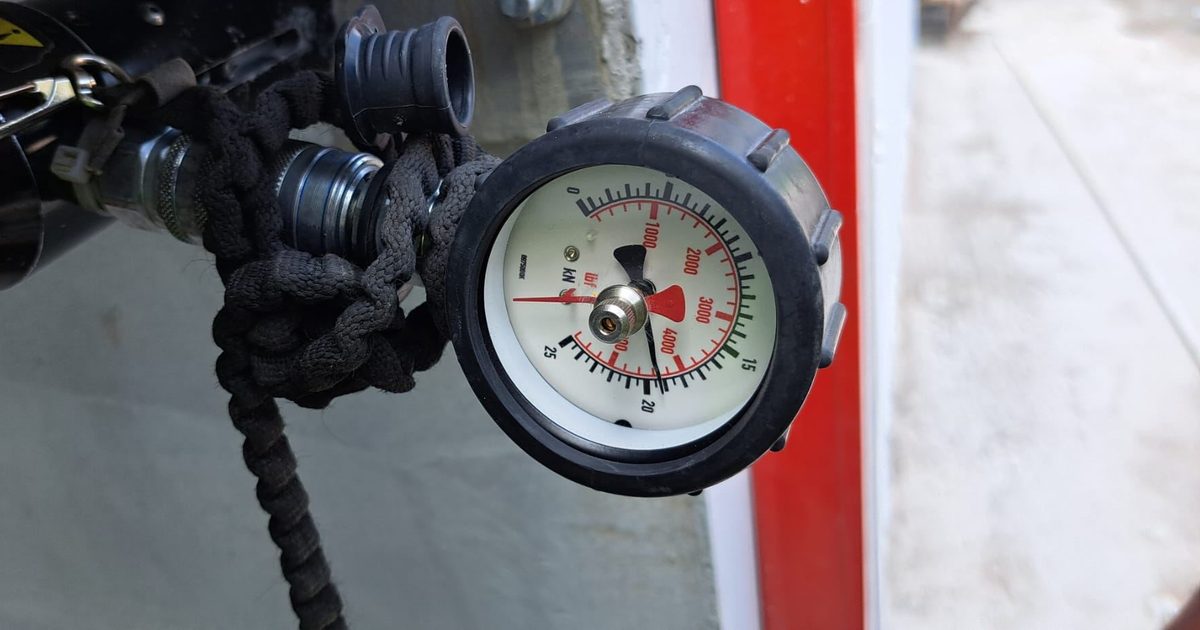
- Calibrated inline load cell: a transducer calibrated with national standards traceability.
- Engineered grip adapters: interchangeable threaded couplers, button adapters and rebar jaws for M6–M36 fixings.
- Digital logger and readout: real-time load, peak hold and displacement curves for consultant QA/QC.
Hydraulic test rams, inline load cells and digital pressure transducers undergo regular calibration, with certificates traceable to national measurement institutes.
The 5-stage test procedure
The test follows a structured five-stage on-site roadmap carried out in accordance with BS 8539: 2012 and SS EN 1992-4.
- Pre-test audit: anchor scoping and PE criteriaReview the construction drawings, anchor specifications, concrete grade and the PE proof load criteria (typically 1.2 to 1.5 times the characteristic design load).
- Tooling setup: pull-out head attachmentAttach high-tensile threaded couplings or hardened rebar wedge jaws directly to the test anchor, without eccentricity or bending stress.
- Reaction assembly: reaction frame standoffPosition a rigid reaction bridge with adequate clearance from the anchor, per BS 8539: 2012, so that the concrete breakout cone is not confined.
- Proof loading: controlled proof load holdApply the tensile force steadily in calibrated increments, sustain the specified proof load for 60 to 120 seconds and log load against displacement continuously.
- Formal reporting: PE / QP endorsementRecord peak load, measured displacement and pass/fail criteria, then issue the formal SAC-SINGLAS accredited engineering test report within 2 hours.
Standards and accreditation
The test method and acceptance criteria follow the project specification, with references including BS 8539: 2012, SS EN 1992-4 and BS 5080-1 where applicable. ISO/IEC 17025:2017 concerns laboratory competence; confirm the accredited scope for the requested test.
- BS 8539: 2012
- SS EN 1992-4 (Eurocode 2)
- BS 5080-1
- ISO/IEC 17025:2017 for laboratory competence; confirm the accredited scope
- BS EN 12004, referenced for façade and pull-off testing
SSM Engineering Solutions is a SAC-SINGLAS accredited laboratory. See its accreditations and certifications.
Who witnesses and endorses the test?
The Consultant, Main Contractor, RE and RTO can witness the test on site, and the results support PE and QP approvals.
Reports record inspector sign-off. Agree any Professional Engineer (PE) or Qualified Person (QP) review and endorsement requirements before testing. Acceptance depends on the project requirements and applicable test scope.
What the test report contains
SSM Engineering issues an engineering test report recording the test criteria, results and inspector sign-off. Confirm turnaround and any PE or QP endorsement requirements when booking.
- Exact test location references
- Anchor specifications
- Applied proof load curves
- Recorded displacement
- Pass/fail determination
- Equipment calibration certificates
- Inspector sign-off
Safety and working on site
Testing is carried out under bizSAFE STAR certified safety management, with ISO 45001:2018 protocols for high-pressure hydraulic testing and work at heights.
- bizSAFE STAR certification verifies a zero-harm culture, comprehensive Risk Assessments (RA) and safe Method Statements (MOS).
- ISO 45001:2018 safety protocols cover high-pressure hydraulic testing, PPE and work-at-height guidelines.
- Tight-access and boom lift deployment capability for overhead and elevated fixings.
- Scheduling follows confirmation of site access and Method Statement sign-off.
Examples from our field work
These are typical test scenarios from the project gallery on the main page.
- Direct tensile proof-load test on a slab anchorOn-site anchor bolt pullout testing in Singapore: a technician operates a hydraulic pump and calibrated pressure gauge over a hollow-piston cylinder to check the installed anchor against the specified proof load.
- Precast column and anchor acceptance inspectionThe SSM Engineering certified site team and client representatives supervise a hydraulic proof-load test on vertical precast concrete elements to verify compliance with PE criteria.
- Perimeter parapet wall fixing verificationDirect axial tensile testing of post-installed anchors on edge parapet beams with a calibrated Hydrajaws tester, to verify holding capacity for architectural cladding subframes.
- Bollard and guardrail base anchor testingIn-situ tensile proof load verification of vehicle impact bollards and safety barrier baseplates in a heavy industrial loading bay slab.
- Overhead steel beam bracket anchor testTight-access direct tensile verification of a structural steel tie-back bracket bolted to a reinforced concrete beam, confirming holding resistance under design tension.
- Vertical rebar starter dowel verificationRebar pullout testing on T25 starter dowels fixed with epoxy resin in a reinforced concrete retaining wall, checking the installed bond against the specified test load.
- Elevated steel structural bolt testingHydraulic tension test on structural steel connection fixings at height, with boom lift access and work-at-height safety protocols.
- Heavy baseplate chemical anchor testProof-load testing of M24 chemical anchors installed in heavy industrial equipment plinths, to verify holding integrity under dynamic and static loads.
Frequently asked questions
What is pullout testing?
Pullout testing, also called the Anchor Pull Out Test, applies a controlled tensile load to installed anchors (chemical anchors, mechanical expansion bolts, rebar dowels) using a calibrated hydraulic tester and reaction frame to measure actual load capacity and displacement in concrete per BS 8539: 2012.
Why is pull-out testing required?
Anchor holding capacity is not decided by the steel fixing alone. Workmanship, hole preparation and substrate condition cannot be verified by visual inspection, so a pull-out test confirms the real installed capacity rather than catalogue values.
What types of anchors and fixings can be pull-out tested?
Rebar and starter dowels, chemical and resin anchors, mechanical expansion bolts, façade and cladding brackets, parapet fixings, MEP and heavy pipe supports, rooftop solar and plant mounts, cast-in channel sockets, structural steel baseplates and safety barrier fixings.
Can pull-out testing be done on existing concrete?
Yes. The test determines the actual resistance of concrete or masonry in the design phase and proves anchor capacity, and it is used on anchors fixed to existing reinforced concrete members, such as structural steel brackets and heavy baseplates.
How is the required test load determined?
The project's Professional Engineer (PE) sets the proof load criteria, typically 1.2 to 1.5 times the characteristic design load. The pre-test audit reviews the construction drawings, anchor specifications, concrete grade and these criteria before testing.
How long is the proof load held?
The specified proof load is sustained for 60 to 120 seconds after being applied steadily in calibrated increments, while load against displacement is logged continuously.
Which standards govern pullout testing in Singapore?
The test method and acceptance criteria follow the project specification, with references including BS 8539: 2012, SS EN 1992-4 and BS 5080-1 where applicable. ISO/IEC 17025:2017 concerns laboratory competence; confirm the accredited scope for the requested test.
Who witnesses and endorses the test?
The Consultant, Main Contractor, RE and RTO can witness the test on site. Reports record inspector sign-off. Agree any Professional Engineer (PE) or Qualified Person (QP) review and endorsement requirements before testing.
What rebar and threaded rod sizes can be tested?
Rebar from T10 to T40 (T10, T13, T16, T20, T25, T32 and T40) and threaded rods from M8 to M36. Interchangeable grip adapters cover M6–M36 fixings.
Can testing be carried out on an active construction site or at height?
Yes. Calibrated hydraulic apparatus is deployed on active construction and civil projects, with tight-access and boom lift deployment capability for work at height. Scheduling follows confirmation of site access and Method Statement sign-off, under bizSAFE STAR certified safety management.
What is included in the final test report?
The report includes exact test location references, anchor specifications, applied proof load curves, recorded displacement, pass/fail determination, equipment calibration certificates and inspector sign-off. The formal engineering test report is issued within 2 hours.
How fast can you mobilise to our site?
We provide rapid response across Singapore with immediate scheduling upon confirmation of site access and Method Statement sign-off.
What information is needed to schedule a test?
Please share: (1) anchor or rebar type and diameter, (2) substrate material, (3) required proof test load (kN), (4) number of test points, and (5) site location in Singapore. Our engineering team responds within 2 hours.